A decentralized digital infrastructure for India's tourism, arts, and culture ecosystem, connecting travelers with authentic local experiences through open protocols.
Onetac

Explore India
Video Placeholder
Video will be placed here
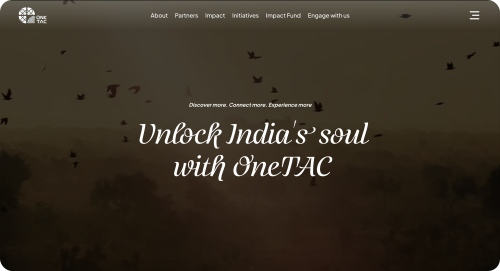
Designing the Digital Backbone of OneTAC
OneTAC is a decentralized digital infrastructure designed to power India's tourism, arts, and cultural ecosystem. Built on open protocols and interoperable frameworks, the platform connects travelers with authentic local experiences—ranging from heritage walks and artisan workshops to cultural performances—making them easily discoverable and bookable across multiple digital platforms.
The initiative aims to unlock the vast but fragmented tourism economy by creating an open, scalable network where communities, startups, and institutions can participate equally. By combining discoverability, trust, identity systems, payments, and data infrastructure into a unified framework, OneTAC enables a more inclusive and sustainable digital backbone for India's cultural and tourism landscape.
Owned the product design of the OneTAC website, translating a complex decentralized tourism infrastructure into a clear and accessible digital experience. Led the structuring of the platform's information architecture, visual hierarchy, and storytelling to communicate the ecosystem, opportunities, and infrastructure layers to diverse stakeholders including travelers, startups, partners, and policymakers.
Alongside the website, contributed to iterating the first prototype of the Practitioner App, refining early flows for practitioner onboarding, experience listing, and participation in the OneTAC network. Collaborated closely with product and engineering teams to evolve initial concepts into a scalable product foundation, helping shape an ecosystem aimed at unlocking cultural experiences across 700+ districts and enabling opportunities within India's growing $3T tourism economy.
- 1 UI/UX Designer
- 3 Leads
- 4 Stakeholders
- 1 Content Writer
- 3 Developers

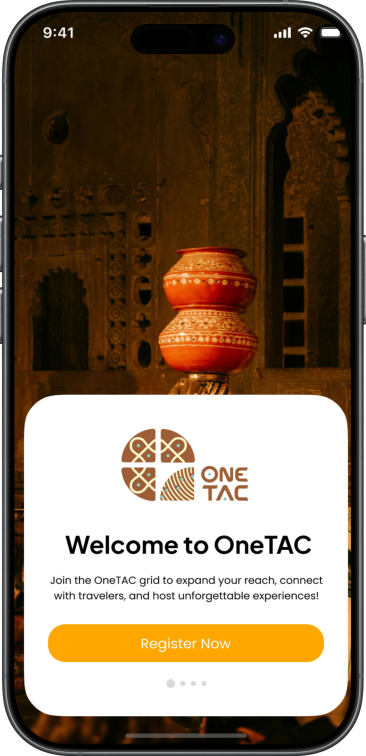
My goal was to help translate OneTAC's vision into a scalable
and intuitive digital platform — structuring complex tourism, arts,
and cultural ecosystems into experiences that feel seamless,
discoverable, and accessible across diverse user groups.
What was the problem?
- ·India's tourism, arts, and cultural experiences are highly fragmented, making it difficult for travelers to discover authentic local offerings beyond mainstream destinations.
- ·Many artists, practitioners, and small cultural businesses lack digital access, limiting their visibility and ability to reach broader audiences.
- ·Existing travel platforms often prioritize commercial tourism products, leaving grassroots cultural experiences underrepresented.
- ·There was no unified digital infrastructure connecting cultural assets, practitioners, and travelers across different platforms and ecosystems.
Understanding the Problem
- ·Creating a platform that unifies discovery and access to diverse cultural experiences across India.
- ·Enabling practitioners and local communities to participate digitally, making it easier to list and share their experiences.
- ·Building an open, interoperable ecosystem where multiple platforms and startups can build services on top of shared infrastructure.
- ·Supporting a scalable tourism ecosystem that unlocks opportunities across 700+ districts and emerging cultural destinations.
My approach focused on simplifying complexity. Since the platform involved multiple engines, automation logic, and system integrations, the goal was to structure the experience in a way that felt
intuitive while still supporting powerful capabilities. I prioritized clarity in workflows, modular system thinking, and scalable design patterns so the product could evolve as the platform grew.
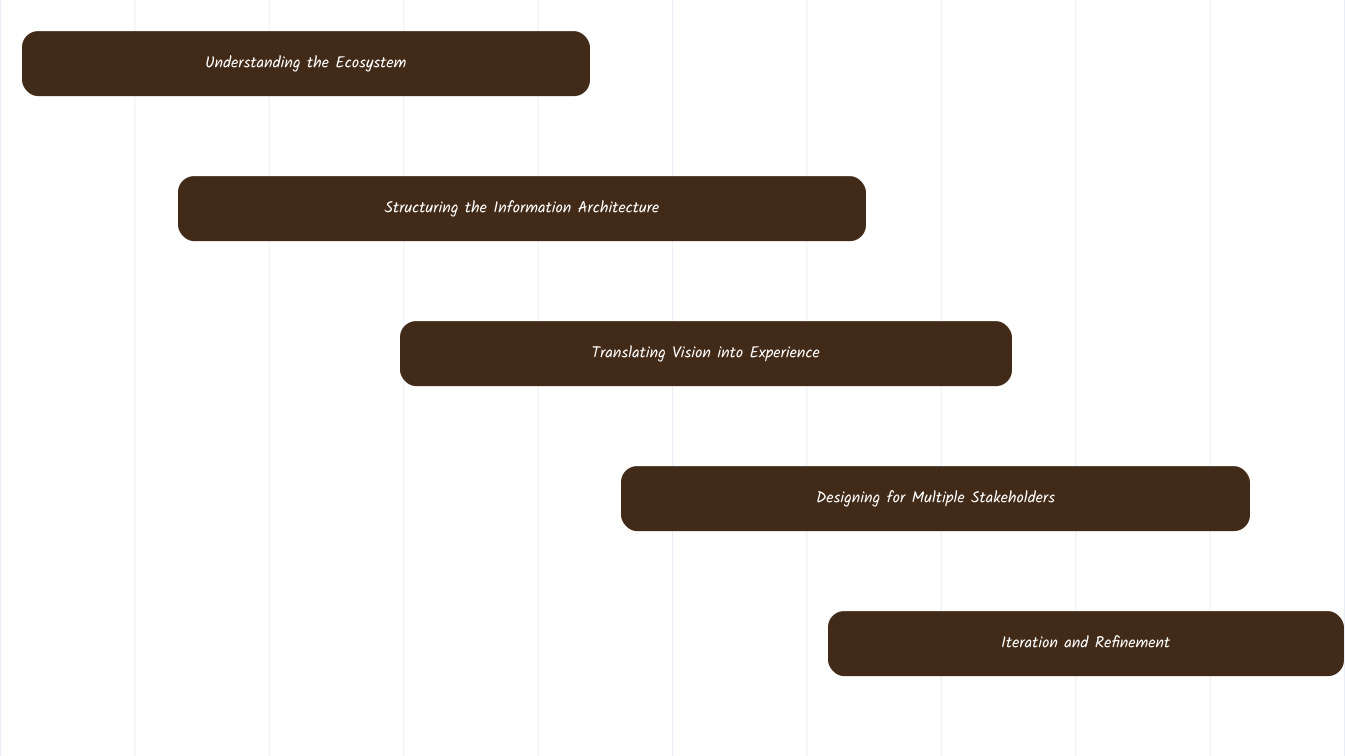
After defining the vision and platform goals, the next step was structuring the website so visitors could understand the initiative progressively. Because OneTAC represents a large ecosystem involving tourism, arts, culture, institutions, and practitioners, the website needed to guide users through the story in a clear and logical flow.
The structure was designed to move users through five key stages: awareness, understanding, trust, proof, and engagement. Each page plays a specific role in communicating the initiative and encouraging participation in the ecosystem.
Landing Page (Awareness)
- ·Introduce the vision of OneTAC and the idea of a digital backbone for tourism, arts, and culture
- ·Create awareness and provide a high-level overview of the ecosystem
About OneTAC (Understanding)
- ·Explain the concept of decentralized tourism infrastructure and open protocols
- ·Help users understand how the ecosystem and technology layers work
People & Partnerships (Trust)
- ·Highlight founding partners, collaborators, and organizations supporting the initiative
- ·Build credibility and showcase ecosystem collaboration
Impact & Experience (Proof)
- ·Demonstrate how OneTAC enables opportunities for practitioners, travelers, and startups
- ·Communicate the real-world impact of the platform
Engage / Begin Your Journey (Conversion)
- ·Provide a pathway for practitioners, partners, and stakeholders to connect or participate
- ·Encourage engagement and ecosystem participation

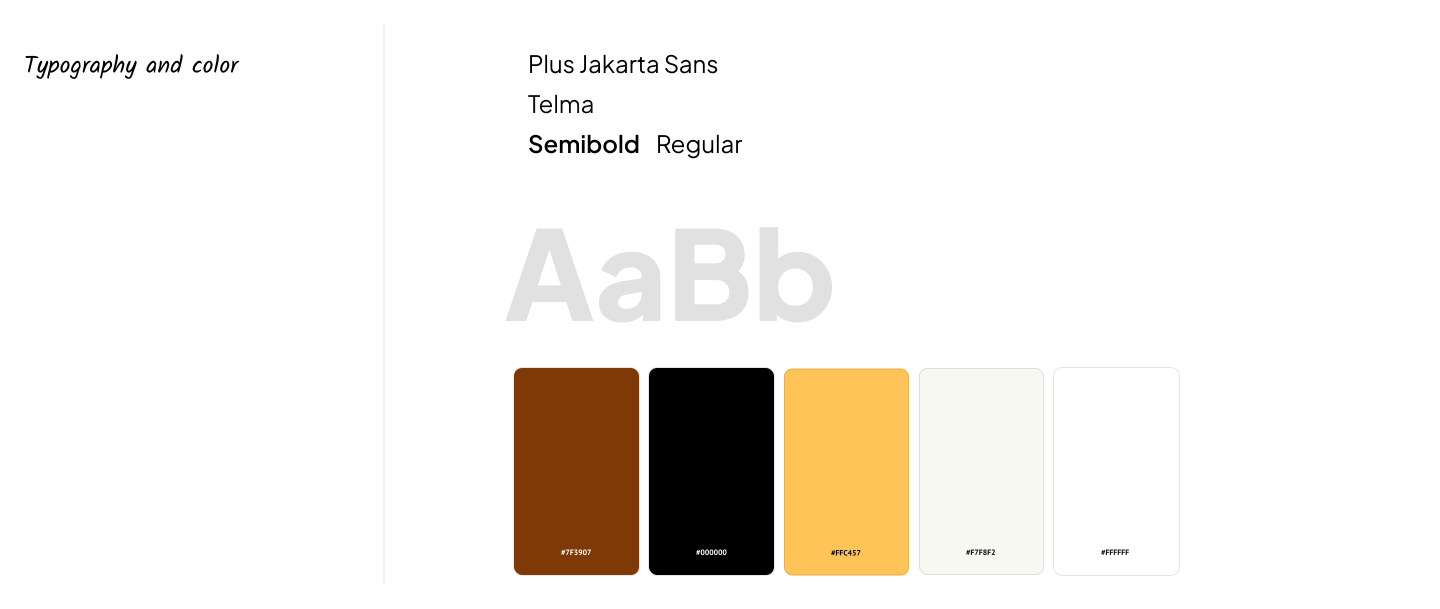

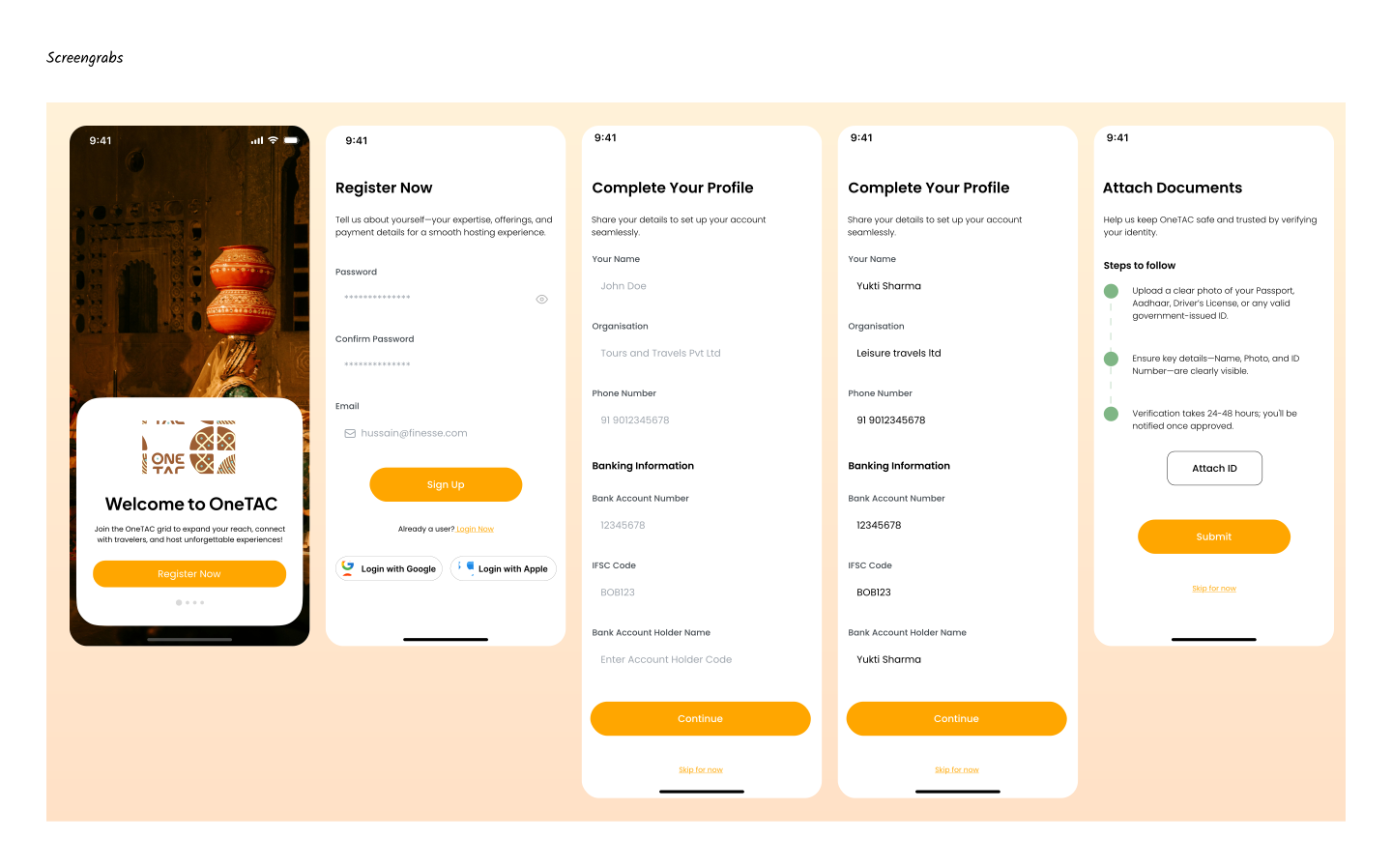
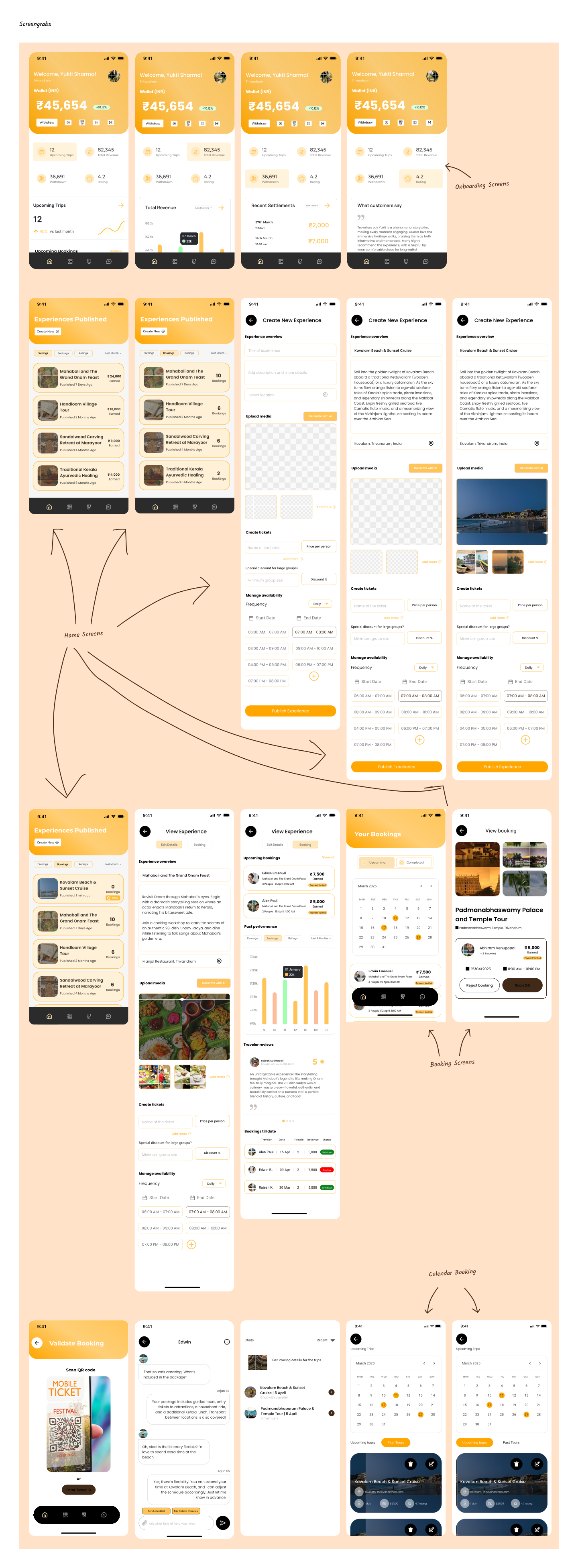
Final Outcomes & Reflections
Bringing the product together meant aligning the platform vision, ecosystem structure, and website experience into a clear narrative that guides users from discovery to participation. The work synthesized research, structure, and design decisions into a cohesive product experience, delivered within a focused two-week sprint.
Outcomes & Impact
- ·3000+ startup ecosystem exposure during Startup Mahakumbh, Delhi, creating strong visibility for the OneTAC initiative.
- ·Addressed 5+ key stakeholder groups including travelers, practitioners, startups, ecosystem partners, and policymakers.
- ·Communicated the broader ecosystem vision spanning 700+ districts across India's tourism landscape.
- ·Highlighted opportunities within the $3T+ tourism economy, positioning OneTAC as a digital backbone for the sector.
- ·Established the website as the central platform for explaining the OneTAC ecosystem and infrastructure layers.
- ·The prototype of the Practitioner Mobile App further strengthened ecosystem understanding, demonstrating how cultural practitioners could onboard and participate in the network.
What I learned
- ·Designing for a multi-stakeholder ecosystem requires balancing different user needs while maintaining a clear narrative across the platform.
- ·Complex systems like digital public infrastructure must be simplified through strong information architecture and visual storytelling.
- ·Early prototypes, such as the Practitioner Mobile App, can significantly improve stakeholder understanding of how a platform will function in real-world scenarios.
- ·Communicating a large-scale initiative requires aligning product thinking, ecosystem storytelling, and strategic positioning.
- ·Exposure through events and ecosystem platforms highlighted how design can act as a bridge between technology, policy, and community participation.
- ·The project reinforced the importance of designing not just for users, but for an entire ecosystem of collaborators and partners.